Background
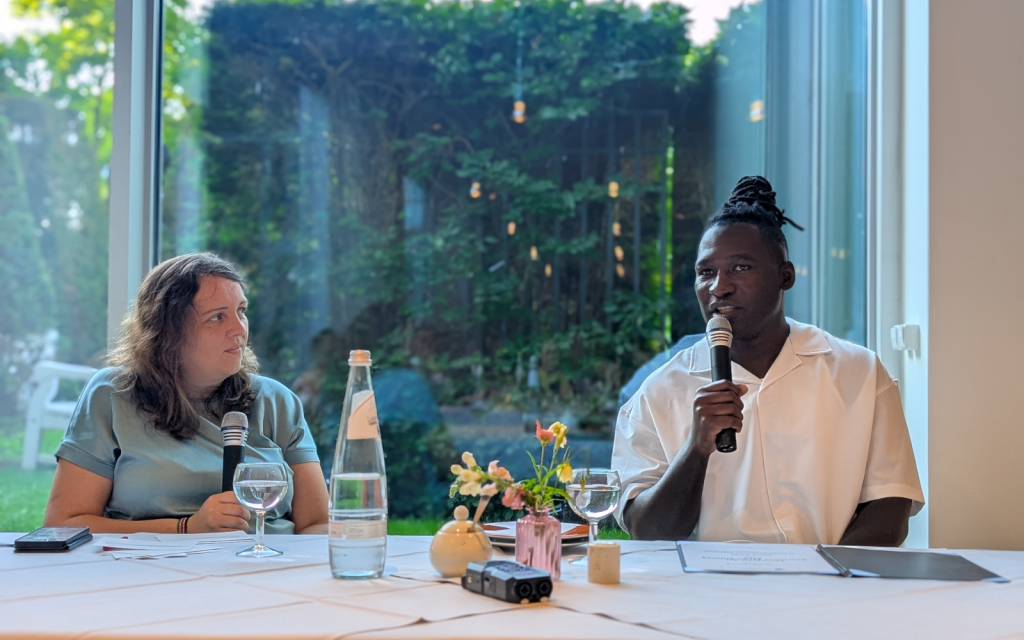
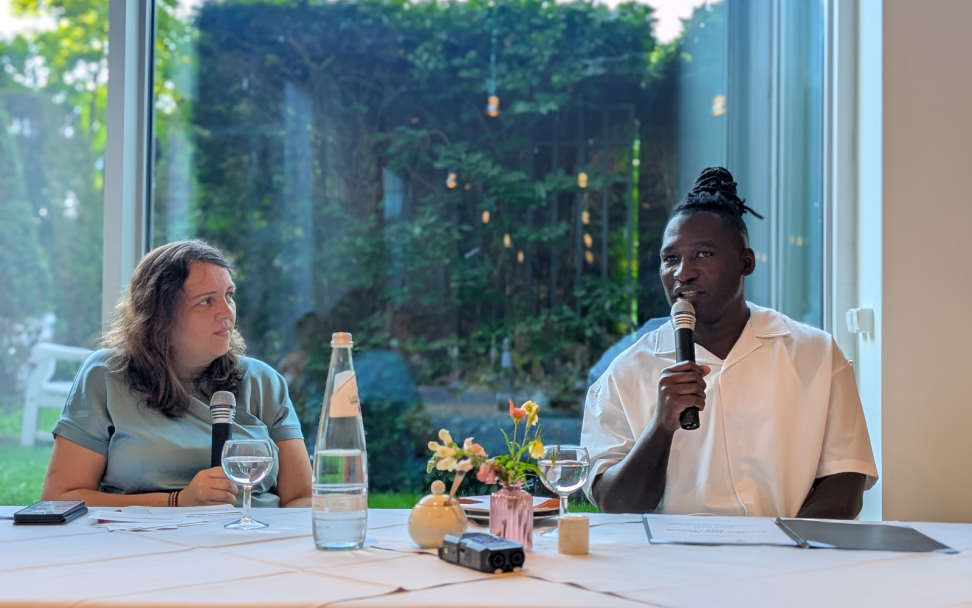
For his commitment to promoting a more nuanced and fact-based image of Africa, Stève Hiobi, better known as “Dein Bruder Stève”, was awarded the 2026 Honorary Award of the German Africa Foundation. In the subsequent conversation with Sabine Odhiambo, Secretary General of the German Africa Foundation, the honorary award recipient spoke about his personal journey, the role of social media, and the responsibility of politics, the media and society in fostering a more differentiated engagement with Africa.
Highlights
• The public debate on Africa in Germany continues to be shaped by growing interest alongside persistent stereotypes; a stronger contextualisation of complex issues is essential.
• Social media can spark interest in African countries and societies – key to this are thorough research, careful contextualisation and responsible communication.
• There needs to be greater willingness to incorporate the perspectives of the African diaspora more strongly into the media, politics and other societal institutions, and to promote diversity in decision-making bodies and editorial teams.
• Political leaders need to better communicate the objectives and impacts of Germany’s Africa and development policy to the public, and strengthen understanding of Africa-related policy issues through greater efforts to explain and provide context.
In Conversation
Promoting a more nuanced image of Africa
Hiobi described the starting point of his work as a content creator as a personal frustration with the one-sided portrayal of Cameroon and other African topics on the social media platform TikTok. During the COVID-19 pandemic, he therefore began publishing his own content, presenting political, social and historical topics related to the African continent in an accessible and nuanced way. Contrary to his initial expectation that only a small number of people would be interested, the positive feedback he received encouraged him to further develop his content. Instead of following a fixed agenda, he focuses on topics that interest him personally and which he hopes will also spark curiosity about Africa among others.
A key topic of the conversation was how Africa is perceived and portrayed in the German public sphere. Hiobi described society’s engagement with this issue as a process that comes in waves: while he repeatedly observes growing interest in and understanding of African issues, he also sees debates in which basic knowledge is still lacking or persistent stereotypes become apparent. For this reason, he believes it is important to address different levels of knowledge and to make both complex interconnections and basic information accessible in a clear and understandable way.
As an example of the challenges involved in public debates, Hiobi referred to the discussion surrounding comments made by football commentator Bastian Schweinsteiger about the Ivorian national team during the ongoing FIFA World Cup. Schweinsteiger had described the team’s style of play, among other things, as “unorthodox”, “wild” and “not quite as shaped by tactics”, referring to an “African football” that was therefore unpredictable.
From Hiobi’s perspective, this debate could have provided an opportunity to discuss the impact of language and the images that are reproduced through certain terms. Instead, the discussion quickly became focused on whether individuals were racist, causing the original criticism of the wording itself to fade into the background. In his own work, he seeks to provide context for such discussions and present them in an accessible way, rather than contributing to further polarisation.
Social media as an opportunity and a responsibility
Hiobi views social media as both an opportunity and a challenge. Platforms such as TikTok enable him to make complex historical and political topics more accessible and to spark interest in the African continent. At the same time, the rapid spread of content also carries the risk of oversimplification, polarisation and emotionalisation. By describing himself as an “Afrofluencer”, Hiobi characterises his approach of using his content to share knowledge and encourage people to engage with African topics. For him, the focus is less on deliberately using mechanisms to maximise reach, and more on providing reliable and accessible content. The feedback from his community has encouraged him to continue this work despite the considerable amount of time it requires
Hiobi emphasised that his content involves a considerable amount of research. The greatest challenge, he explained, was to develop an accessible approach to a complex topic that sparks interest and encourages people to engage more deeply with African countries and societies.
In doing so, he also draws on local sources, which can sometimes be challenging due to language barriers and the availability of suitable information. Producing a video of around one and a half minutes can take approximately four hours, including research, production and editing. Hiobi stressed that he is also able to continue this work thanks to the support of his family.
For Hiobi, working on social media also comes with a particular responsibility, as many people, especially younger audiences, use these platforms as their first source of information. In his view, traditional media should not see content creators as competitors, but should instead seek greater opportunities for collaboration. He also faces hostility and hateful comments, but tries to respond to them with composure and, at times, humour. For him, the key is to use his content to provide context for debates and to help prevent forms of polarisation that do not contribute to advancing public discussion in the first place.
More perspectives in politics, the media and society
According to Hiobi, developing a more nuanced image of African countries and societies in Germany first requires a willingness to engage with these issues in greater depth. It is particularly important to recognise and take seriously the perspectives of the African diaspora. Newsrooms, associations, foundations and political institutions need to incorporate these perspectives more strongly, become more diverse and work together to drive positive change. Politics also has an important role to play in this regard: it needs to better explain the objectives and impacts of Germany’s Africa and development policy to the public. A lack of knowledge and understanding can lead to scepticism; greater efforts to provide explanations and context, on the other hand, can help strengthen interest in and acceptance of Africa-related policy issues.
You can download the full event summary here.
To listen to the DAS Podcast Episode with Stève Hiobi, click here (in German).