A school is a place of learning, but it also offers the opportunity to ensure that children are safe, healthy and well-nourished. This includes access to safe drinking water, sanitation and hygiene, nutritious and safely prepared meals, and an environment that protects children’s dignity and enables them to lead healthy daily lives.
When connected to local agriculture and businesses, they can also create reliable markets, generate employment, reduce food losses and strengthen local economies.
The Kenyan social enterprise Food4Education, founded by Wawira Njiru, recipient of the 2026 German Africa Prize, demonstrates the potential of this approach. Every school day, Food4Education serves more than 730,000 children across over 2,700 schools in Kenya. More than 80% of its food is sourced locally, creating dependable demand for farmers, food suppliers and transport businesses.
Turning school meals into economic infrastructure is a challenge. Farmers need access to safe storage, affordable financing, reliable buyers and functioning distribution networks. School meal programmes, in turn, require sustainable financing, efficient procurement and partnerships across the agricultural value chain in order to provide safe and nutritious food. The private sector can help develop scalable solutions, mobilise investment and create market opportunities, while public institutions can provide enabling frameworks and integrate school meals into broader strategies for food and nutrition security, agriculture and local economic development. Development cooperation can support these efforts by strengthening local capacities, addressing gaps in capacities, infrastructure and financing, and fostering partnerships that allow locally developed solutions to grow sustainably.
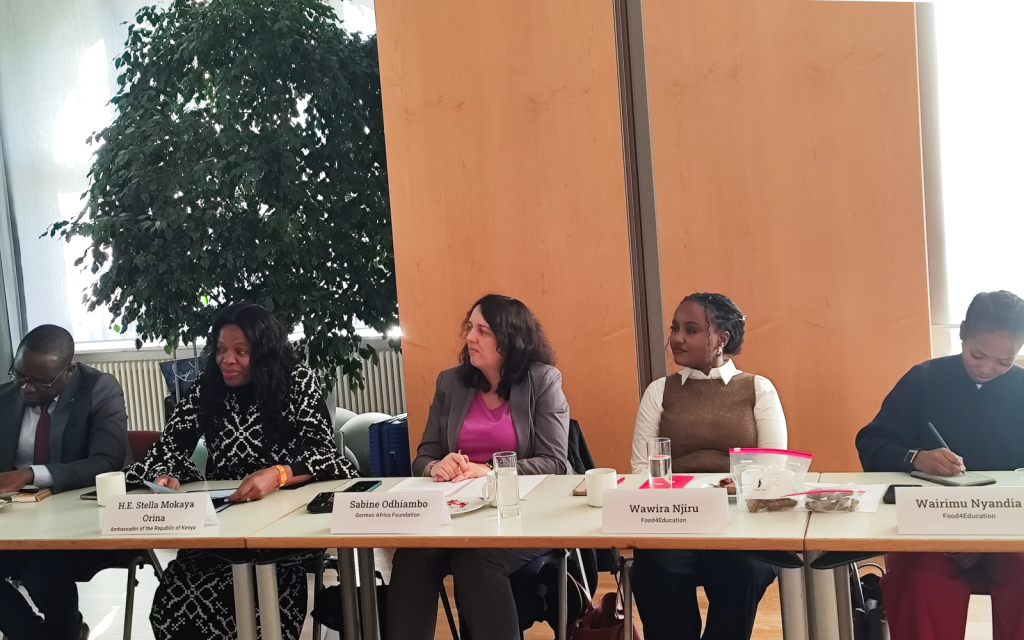
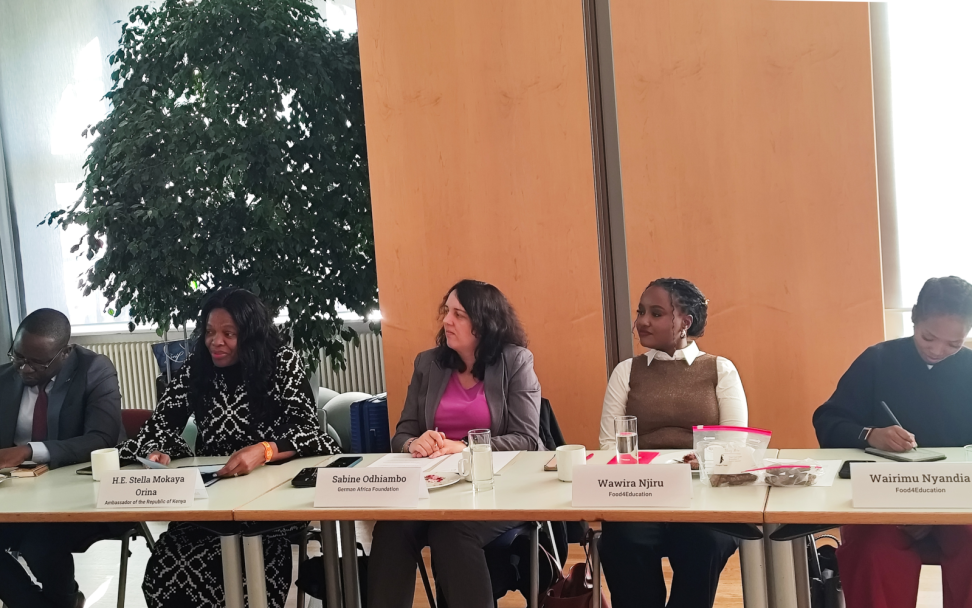
The roundtable explored how school meal programmes can generate wider economic benefits beyond improving school attendance, learning performance and child nutrition. How can school meal programmes successfully foster economic development and strengthen local value chains? How can businesses and public institutions work together to create reliable demand for locally produced food? What conditions are needed to reduce post-harvest losses, improve storage and distribution, and expand access to finance for smallholder farmers? And how can German development cooperation support locally led approaches that create jobs, build resilient local economies, strengthen food security and improve health and nutition of learners?
Programme
Discussion:
Josephine Figiel, Advisor, Rural Development and Food and Nutrition Security Competence Centre, GIZ
Wawira Njiru, Founder & CEO, Food4Education
Kizito Odhiambo, Founder & CEO, agriBORA
Moderation:
Sabine Odhiambo, Secretary General, German Africa Foundation